22 Feb Looking out for skin cancer: The Ultimate Guide to Protecting Yourself
Looking out for skin cancer: The Ultimate Guide to Protecting Yourself
By Island Hospital | Feb 22, 2021 5:17:39 PM
Skin cancer quietly ranks among the most common cancers worldwide, alongside lung, breast, and colon cancers.
Unlike what many assume, it doesn’t only appear in sun-drenched areas but can also emerge in places rarely exposed to sunlight, often catching people off guard.
The encouraging reality is that early detection makes a world of difference because survival rates are high when skin changes are noticed and treated promptly.
Learning to recognise subtle signs and distinguish them from harmless blemishes allows you to take swift action, transforming awareness into one of your most powerful defenses.
Where Does Skin Cancer Develop
Skin cancer usually forms on areas of the skin that are exposed to the sun, which are the arms, legs, face and scalp. Parts of the face such as the lips, ears and neck are also areas that can be affected.
Contrary to popular belief, skin cancer doesn’t only develop in sun-exposed areas. It can also appear in places usually hidden from sunlight, such as the genitals or beneath your fingernails and toenails.
A common misconception is that people of darker skin tones or complexions do not get skin cancer because they have more melanin in their skin. While melanin protects the skin from UV rays, this is not true. People of darker skin can still get skin cancer.
In fact, research has shown that skin cancer is often detected at a later stage in people with darker skin colour.
This is because people of color tend to develop skin cancer in areas that are uncommon, making detection slightly more difficult for some individuals. Due to the misconception, people of colour may also choose not to check for skin cancer until a later stage
Types of Skin Cancer
There are three main types of skin cancers, which are:
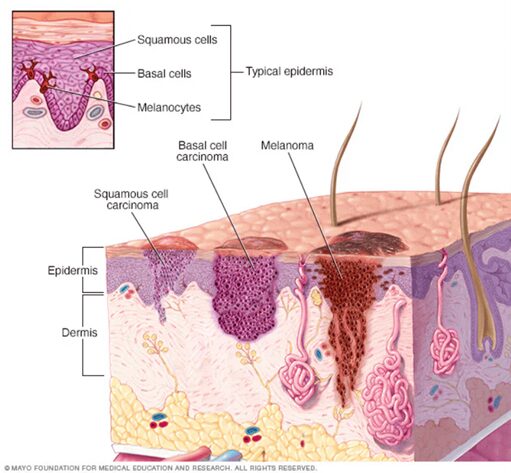
Most skin cancer cases are non-melanoma cases, consisting of either basal cell carcinoma (BCC) or squamous cell carcinoma (SCC) cases.
These cancers are malignant but are unlikely to spread when treated early. Basal cell carcinoma and squamous cell carcinoma usually occur in sun-exposed areas of the skin.
The more uncommon skin cancer is melanoma, which also happens to be the most dangerous one. Melanoma is highly aggressive and is known to cause the most number of deaths by skin cancer.
Melanoma can develop anywhere in a person’s body, where it can either develop on normal skin or in an existing mole. In men, melanoma often appears in the face or the trunk. In women, it often develops in the lower region or the legs.
________________________________________________________________________
Prevention is better than cure. Understand how early detection through skin biopsy or other medical tests improves your survival rates for skin cancer here: Early Detection, Early Action: The Importance of Skin Cancer Screenings.
______________________________________________________________________
Signs and Symptoms of Skin Cancer
Skin cancer can appear in many different forms, and the signs aren’t always obvious.
Recognising the early warning signals is crucial, as catching it promptly can make treatment far more effective.
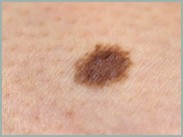
The table below outlines the most common types of skin cancer and their typical signs, helping you identify what to look out for:
| Type of Skin Cancer | Common Signs and Symptoms |
Basal Cell Carcinoma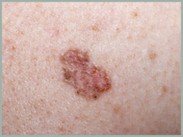 |
|
Squamous Cell Carcinoma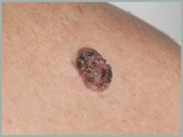 |
|
| Melanoma
|
|
Signs and symptoms of less common skin cancers
Apart from the three major types of skin cancer, there are other forms of skin cancer such as merkel cell carcinoma or sebaceous gland carcinoma:
- Merkel cell carcinoma causes shiny nodules to appear on the skin or hair follicles. This cancer is often found on the head, neck or trunk.
Sebaceous gland carcinoma develops in the oil glands of the skin — which can create hard, painless nodules in the affected areas. It forms mostly around the eyelid and is often mistaken for eyelid problems. It is an uncommon cancer but can be aggressive and early treatment is advised.
How Does Skin Cancer Happen?
Cancer occurs when an error or mutation occurs in cells. Instead of growing at a controlled rate, the cells multiply rapidly and form a mass of cancer cells. When this occurs in the cells of our skin, then skin cancer will form.
Skin cancer begins in the top layer of our skin, known as the epidermis. Within the epidermis, there are three types of cells.
- Squamous cells, which are right under the outer surface of the epidermis. This is the inner lining of the skin.
- Basal cells are beneath the squamous cells, these cells produce new skin cells when needed.
- Melanocytes are located in the lower part of our epidermis. These cells produce melanin, which is the pigment that gives our skin colour. The more melanin our body creates, the darker or more tanned we will become.
| Fact: When we are under the sun, the melanocytes will create more melanin to protect the deeper layers of our skin; which explains why our skin tends to turn darker after prolonged exposure to sunlight. |
The damage our skin suffers is often a result of ultraviolet (UV) radiation, found in sunlight or the lights used in tanning beds. However, UV radiation is not the sole cause of skin cancer; as it is possible to develop skin cancer in parts of the skin that aren’t exposed to sunlight.
As such, there are other factors that may also contribute to your risk of skin cancer. For some people, staying clear of the sun is not enough to be safe from skin cancer.
Risk Factors
Factors that may increase your risk of skin cancer are:
- Fair skin
While it is true that anyone can get skin cancer regardless of skin colour, individuals with fair skin have less melanin (pigment) in their skin which provides less protection from UV radiation.
- Sunburns
Individuals who sunburn easily are also more likely to develop skin cancer than individuals with darker skin. The more sunburns a person has had, the greater their risk of skin cancer.
- Sun exposure
Individuals exposed to the sun for long periods of time without adequate protection from sunscreen or clothing are also at risk of skin cancer. This is true for individuals who get tans or are exposed to tanning lamps/beds; as a tan is the skin’s response to excessive UV radiation.
- Moles
People with many moles or abnormal moles are also at an increased risk of skin cancer, because irregular moles are more likely to develop into cancerous lesions. A person with a history of abnormal moles will need to be vigilant and watch for any changes in their moles or skin.
- A family history of skin cancer
If your parents or siblings have had skin cancer, then you may be at an increased risk as well.
- A weakened immune system
People with weakened immune systems caused by diseases such as HIV/AIDS or by immunosuppressant drugs are more likely to develop skin cancer.
- Radiation
If you have received radiation as a form of treatment, then you may also have an increased risk of skin cancer.
________________________________________________________________________
With tens of thousands of cases of Hepatitis B and C in Malaysia, early detection and vaccination are key. Learn how early screening, timely treatment, and vaccination can safeguard your liver in 3 Most Common Hepatitis.
______________________________________________________________________
Prevention
One of the ways a person can reduce their risk of skin cancer is by limiting or avoiding exposure to ultraviolet (UV) radiation. Some methods that can help you do so are:
- Avoid the sun during the middle of the day when the sun is at its brightest, which is often 12PM to 3PM in the afternoon.For individuals who have a history of sunburns or often find themselves outside during these hours, consider using sunscreen or clothing that can help protect your skin from UV rays.
- This allows you to avoid sunburns or tans that cause skin damage, both of which can increase your risk of skin cancer. This is especially true for individuals who enjoy swimming or who are on vacation.
| Fact: Your skin generates vitamin D when exposed to the sun, so you should not avoid sunlight completely. A healthy balance is required in all things, which includes exposure to sunlight. |
- Wear protective clothing such as tight clothes that cover your arms and legs. Sunscreens may offer protection from UV rays, but it is not complete as compared to covering your skin with clothing. For individuals that are looking to protect their scalp or face, broad hats are better and offer more complete protection than regular baseball caps or visors.
- Avoid tanning beds as the UV rays emitted by the lamps can also damage skin cells and increase your risk of skin cancer.The lights used in tanning beds emit UV rays and can increase your risk of skin cancer.
- Certain medications may increase a person’s sensitivity to sunlight. If this concerns you, check with your doctor or pharmacist if any of your medications will increase your sensitivity to sunlight; and consider taking extra precautions to stay out of the sun.
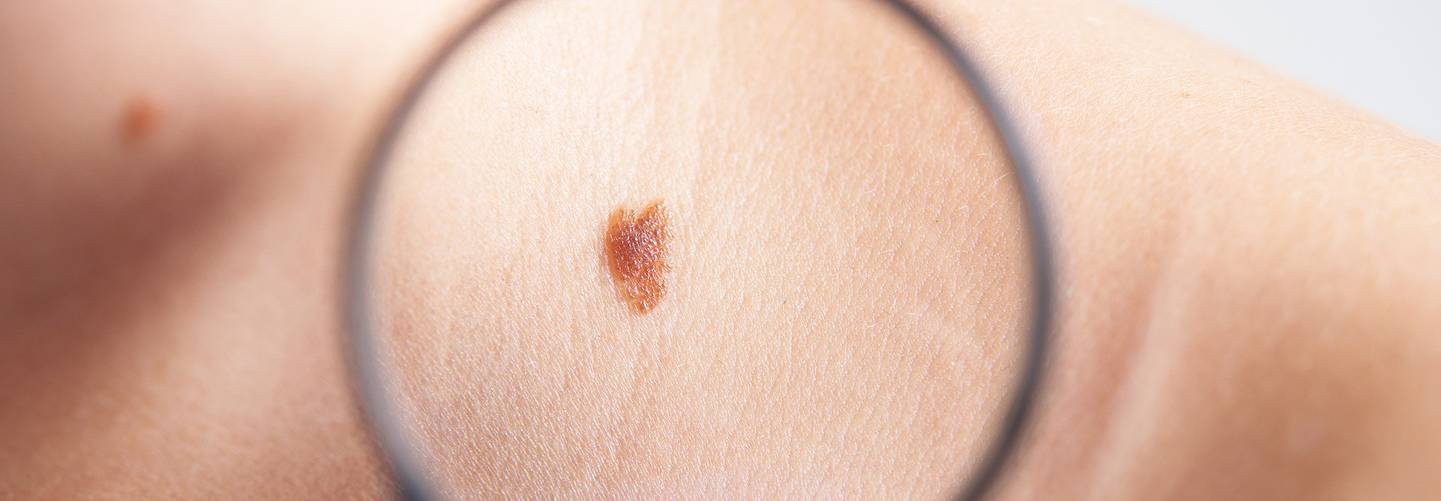
Apart from limiting your exposure to UV radiation, it is also a good habit to check your skin regularly for any changes or new growths; especially in existing moles, bumps or birthmarks.
Some of the commonly affected areas like your face, neck, scalp and eyes are worth checking from time to time. Uncommon areas such as the legs, feet and genital areas should also be checked every once in a while.
Early detection of skin cancer gives you the greatest chance for successful skin cancer treatment. If you suspect any abnormal growth, lumps or changes in your skin; do not hesitate to consult a dermatologist.
Treatment
Treatment options for skin cancer and pre-cancerous skin lesions will vary depending on the type of lesion. Small skin cancers may simply require a skin biopsy to remove the entire growth, while other types of skin cancer may require other options such as:
- Freezing (cryosurgery)
Early skin cancers and small lesions can be frozen using liquid nitrogen in a process known as cryosurgery. This kills the tissue and the body will discard the dead cells when it thaws. - Excision
Your doctor will cut out the cancerous skin tissue along with some of the healthy skin that surrounds it.
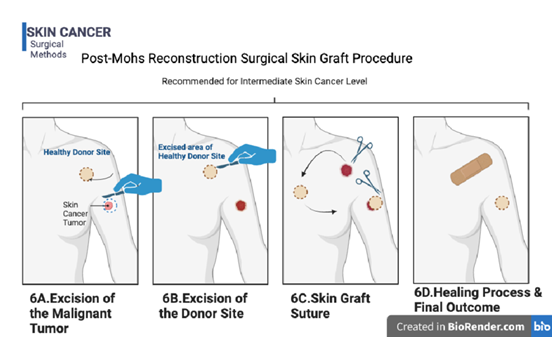
This method is done to not only remove the harmful cancer cells, but also to reduce the likelihood of cancer recurrence by removing a margin of the cells around the cancer cells.
- Mohs surgery
This procedure is used to treat larger or difficult skin cancer cases, and may also be used to treat recurring skin cancer cases. Mohs surgery is also used to treat skin cancer on parts where skin needs to be conserved, such as a person’s nose or lips.
For this procedure, the doctor will remove the skin affected by cancer in layers with the use of a microscope. Each layer of skin is removed one by one until all the abnormal / cancerous cells are removed.
- Curettage with electrosurgery or cryotherapy
A combination of two procedures, the first is curettage; where the doctor will use a spoon-shaped blade to remove the skin cells affected by cancer.
Afterwards, the remaining cells will be:
- Burned using an electric needle (electrosurgery)
- Frozen with liquid nitrogen and then removed (cryotherapy)
Apart from the aforementioned procedures, other treatment methods may also be employed to treat skin cancer depending on the stage and severity:
- Radiation therapy / radiotherapy
High-powered energy beams such as X-rays are used to kill the cancer cells. If the cancer cannot be completely removed by surgery, radiotherapy might be used.
- Chemotherapy
In some cases, chemotherapy drugs are used to kill cancer cells in the person’s body. For skin cancers that are confined to the top layer of the skin, some anti-cancer agents or creams may be used instead of drugs.
Chemotherapy is often used to treat cancers that have spread to other parts of the body.
- Photodynamic therapy
By using drugs that make cancer cells more sensitive to light, skin cancer is treated using laser light to destroy the cancer cells.
Your Road to A Healthier Liver Starts Today
Protecting your skin and catching potential concerns early can start today through awareness, timely checks, and habits that support long-term skin health.
Every person’s skin, risk factors, and lifestyle are different.
That’s why at Island Hospital, effective skin cancer care begins with a personalised approach guided by our experienced oncologist and dermatologist specialists who understand both the medical science and the personal impact of early detection and treatment.
Book a consultation with our skin specialist today to begin a personalised care plan designed around you and your long-term skin health.
FAQs
1. How often should I check my skin for signs of skin cancer?
It’s generally recommended to perform a self-examination once a month. This helps you become familiar with your skin and notice any new spots or changes early.
Use a mirror to check hard-to-see areas such as your back, scalp, soles of your feet, and between your fingers and toes. If you notice anything unusual—such as a new growth, a sore that doesn’t heal, or a mole that changes in size, shape, or colour—it’s important to seek medical advice.
2. Can skin cancer develop even if I avoid the sun?
Yes. While sun exposure is a major risk factor, skin cancer can also develop in areas that receive little or no sunlight, such as under the nails, on the palms and soles, or in the genital area.
Other factors, including genetics, previous skin injuries, and immune system health, can also play a role. This is why regular skin checks should include the entire body, not just sun-exposed areas.
3. Are people with darker skin tones at risk of skin cancer?
Yes. Skin cancer can affect people of all skin tones. Although higher melanin levels provide some protection against UV radiation, they do not eliminate the risk.
In people with darker skin, skin cancer is often diagnosed later because early signs may be overlooked or mistaken for benign conditions. Awareness and regular checks are essential regardless of skin tone.
4. What should I do if I notice a suspicious spot or mole?
If you notice a spot that looks unusual, changes over time, bleeds, itches, or does not heal, it’s best to have it evaluated by a healthcare professional as soon as possible.
Avoid trying to diagnose it yourself or waiting to see if it improves on its own. Strictly do not attempt to remove the mole yourself at home as it may worsen your condition.
5. What happens during a skin cancer screening or consultation?
During a skin cancer screening, a doctor will examine your skin from head to toe, sometimes using a specialised tool called a dermatoscope to view lesions more clearly. If an area appears suspicious, further tests such as a biopsy may be recommended.
Your doctor will also discuss your medical history, sun exposure, and risk factors, and advise you on monitoring, prevention, and follow-up care tailored to your needs.
Related Doctors
Latest Blog Posts
February 11, 2026