

28 Jan Chemotherapy vs. Immunotherapy: Which Is Better for Cancer Treatment?
What to Expect During Chemotherapy: Preparation, Side Effects, and Recovery
By Island Hospital | 28 January 2026. 12:00:00 PM
Hearing the word “cancer” usually brings a whirlwind of emotions, followed quickly by a single, vital question: “What is the best path forward for me?”
Deciding between common treatments like chemotherapy and immunotherapy can feel overwhelming.
Because cancer is as unique as the person it affects, there is no “one-size-fits-all” answer. The right choice depends on how the disease behaves, how your body responds, and what you hope to achieve through treatment.
In this article, our Island Hospital oncologists will guide you through the decision between chemotherapy and immunotherapy, explaining when each treatment may be more suitable and what patients can realistically expect, helping you understand your options and feel confident for the discussions with your care team.
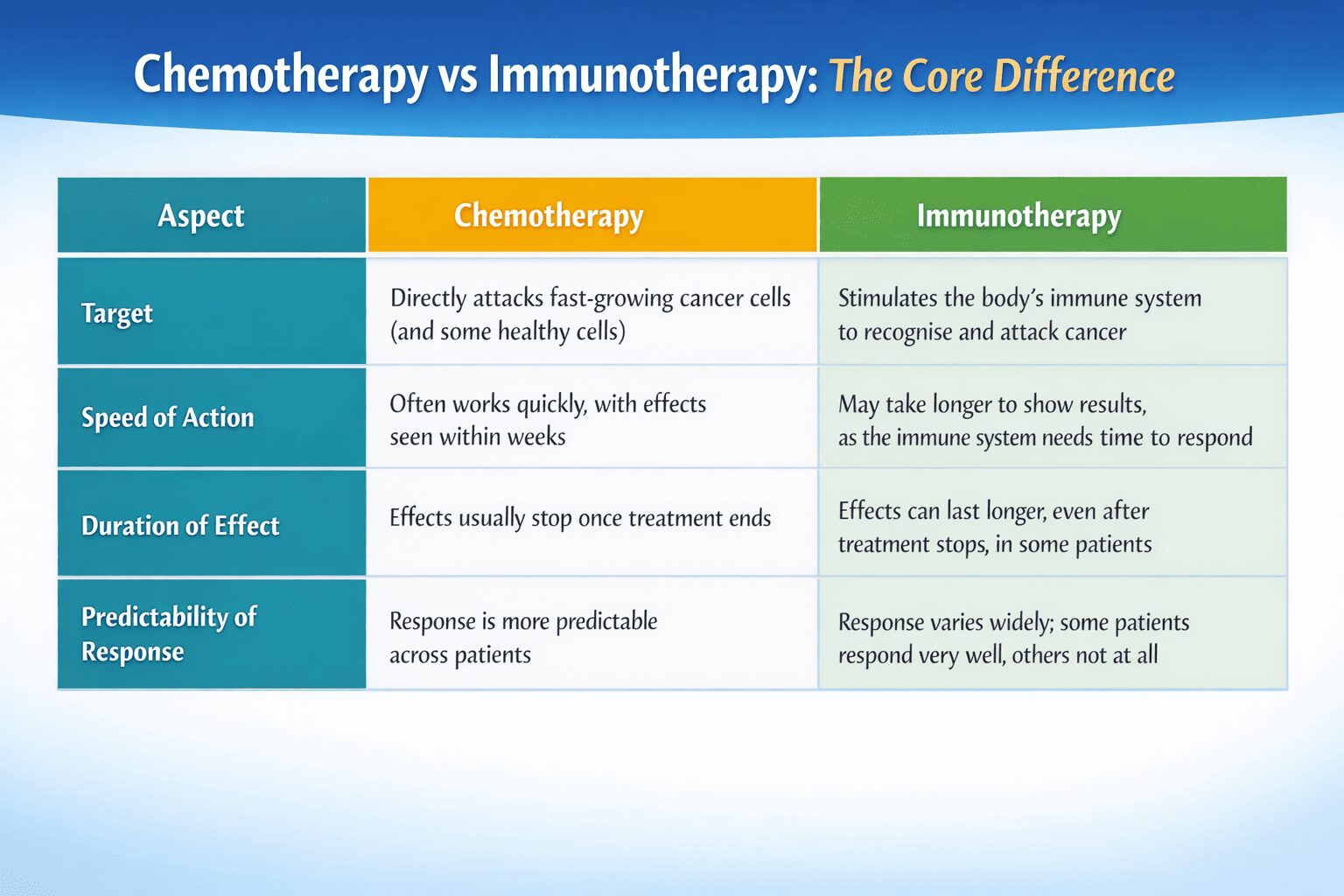
Chemotherapy vs Immunotherapy: Understanding The Core Difference
How Chemotherapy Works
Chemotherapy uses drugs that kill rapidly dividing cells, including cancer cells. This helps shrink tumours quickly as cancer cells divide faster than most normal cells.
However, its efficacy can also affect healthy fast-growing cells such as hair follicles, bone marrow, and the digestive tract.
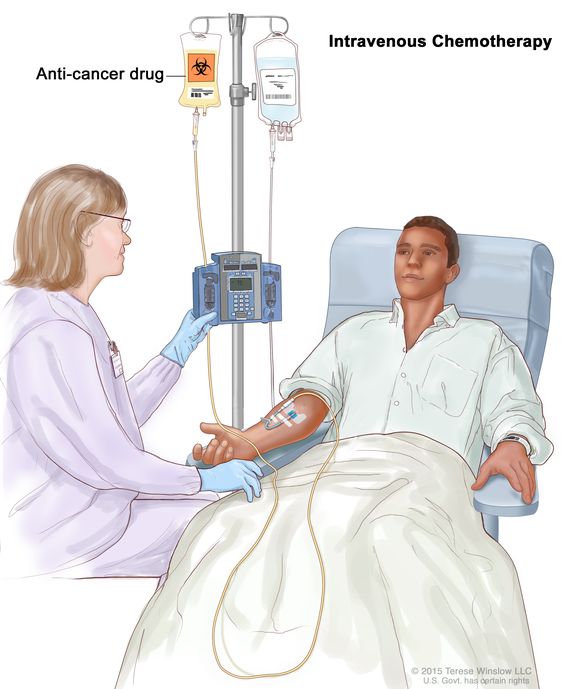
Key characteristics of chemotherapy:
- Acts directly on cancer cells
- Works quickly
- Effects are usually predictable
- Side effects often appear during treatment but improve afterward
How Immunotherapy Works
Immunotherapy does not directly kill cancer cells. Instead, it stimulates or reprograms the immune system so it can recognise and attack cancer more effectively.
Key characteristics of immunotherapy:
- Relies on the body’s immune response
- Does not work for all cancers or patients
- Responses may take longer to appear
- Can provide long-lasting control in some cases
| Prefer seeing it in action? Understand better by watching this short video explaining the core difference between chemotherapy and immunotherapy. |
Which Treatment Is More Effective? (What “Better” Really Means)
Determining which treatment—chemotherapy or immunotherapy—is “better” is not straightforward.
Effectiveness varies depending on the type of cancer, the stage, the patient’s overall health, and what outcomes are most important for that individual. Doctors usually evaluate effectiveness using several key measures:
- Tumor Shrinkage (Response Rate)
- Chemotherapy: Often leads to rapid tumor shrinkage. This can be crucial when a tumor is causing severe symptoms, compressing organs, or spreading quickly. Quick responses can relieve pain, improve organ function, and sometimes make surgery possible.
- Immunotherapy: Tumor shrinkage may be slower or even delayed, as the immune system gradually mounts a response. However, some patients experience dramatic, long-lasting tumor reduction after an initial period of stability or even apparent progression.
- Duration of Disease Control (Progression-Free Survival)
- Chemotherapy: While chemotherapy can reduce tumor size quickly, the effect may be temporary. Tumors can sometimes grow back shortly after treatment ends.
- Immunotherapy: Some patients achieve long-term disease control, with tumors remaining stable for months or years, even after treatment has stopped. This is especially notable in cancers like melanoma or certain lung cancers.
Overall Survival
- Both treatments can extend survival, but the patterns differ. Chemotherapy may offer immediate life-extending benefits, whereas immunotherapy can provide prolonged survival in patients who respond well.
- Ongoing research is exploring which patients are most likely to benefit from long-term survival with immunotherapy.
Key Takeaway:
|
Ultimately, the “better” treatment is highly individualised. Oncologists often use biomarkers, genetic profiling, and patient preferences to guide the choice, and sometimes a combination of both therapies offers the most benefit.
________________________________________________________________________
Cancer rates are rising, and knowing the warning signs can make all the difference. Read the full article here to discover the 9 most common cancers and what to watch for.
______________________________________________________________________
How Doctors Decide Between Chemotherapy and Immunotherapy
Choosing the right treatment isn’t one-size-fits-all. Oncologists consider several key factors before recommending chemotherapy, immunotherapy, or a combination:
- Cancer Type and Stage
- Some cancers respond better to immunotherapy (e.g., melanoma, certain lung cancers), while others are more responsive to chemotherapy. The stage of cancer—early, locally advanced, or metastatic—also influences the choice.
- Previous Treatments
- If a patient has already received chemotherapy or other therapies, doctors evaluate whether immunotherapy might work better or if another round of chemotherapy is appropriate.
- Patient’s Overall Health
- Factors like age, organ function, and other medical conditions affect treatment tolerance. Chemotherapy may be harder on patients with weaker immune systems, while immunotherapy can trigger immune-related side effects.
- Speed at Which Cancer Needs to Be Controlled
- Chemotherapy can shrink tumors quickly, making it preferable when rapid control is necessary.
- Immunotherapy can take longer to work but may provide long-lasting control once the immune system responds.
The Role of Biomarker Testing
Not every patient benefits from immunotherapy. Oncologists often use biomarker tests to predict whether a patient is likely to respond:
- PD-L1 (Programmed Death-Ligand 1)
- A protein on cancer cells that can suppress the immune system. High PD-L1 levels may indicate a better response to certain immunotherapies.
- MSI-H / dMMR (Microsatellite Instability-High / Deficient Mismatch Repair)
- Tumors with these characteristics have many mutations, making them more visible to the immune system and more likely to respond to immunotherapy.
- Tumor Mutational Burden (TMB)
- A measure of how many mutations a tumor has. Higher TMB can increase the chances that immunotherapy will be effective, though this is considered at a broader level rather than as a strict cutoff.
________________________________________________________________________
Colorectal cancer is one of the most common cancers worldwide with about 1.9 million new cases diagnosed each year. Check out how early action can save lives in our article: Colorectal Cancer Prevention & Treatment.
______________________________________________________________________
When Chemotherapy Is Still the Better Choice
In some cases, chemotherapy remains the most effective treatment option, particularly when the goal is to slow disease progression, reduce tumour size, or relieve symptoms.
Your care team carefully weighs the potential benefits against the risks to ensure chemotherapy is recommended only when it offers meaningful clinical value.
Chemotherapy Side Effects
Chemotherapy can affect the body in several ways. Common side effects include:
- Hair loss – Often temporary, with hair usually growing back after treatment.
- Nausea – Can be managed effectively with anti-nausea medications.
Fatigue – Feeling tired is common, but energy levels typically improve between treatment cycles. - Lowered immunity – Increases the risk of infections, so precautions and monitoring are important.
While these side effects can be challenging, they are usually temporary and can be carefully managed with supportive care and medications, helping patients maintain their quality of life during treatment.
Chemotherapy is often recommended in situations such as:
- Rapidly growing cancer: When the tumor is progressing quickly, chemotherapy can act fast.
- Need for immediate tumor reduction: For cases where shrinking the tumor promptly is crucial, chemotherapy can provide rapid results.
- Cancer types less responsive to immunotherapy: Certain cancers are known to respond better to traditional chemotherapy than to newer immunotherapy options.
- Biomarker results do not support immunotherapy: If testing indicates that immunotherapy is unlikely to be effective, chemotherapy may be the safer route.
- Urgent symptom relief: Chemotherapy can help alleviate cancer-related symptoms more quickly in some patients.
Despite the remarkable advances in cancer treatment, chemotherapy continues to be a cornerstone of care as it often provides life-saving benefits when timing and effectiveness are critical.
When Immunotherapy May Be the Better Choice
Immunotherapy may be recommended in situations such as:
- Cancers known to respond well: Certain cancer types have shown strong responses to immunotherapy.
- Positive biomarker testing: When tests indicate that the patient’s tumor is likely to respond, immunotherapy can be a promising option.
- Goal of long-term disease control: Immunotherapy can sometimes provide durable responses, helping keep the cancer in check over time.
- Inability to tolerate chemotherapy: For patients who may struggle with the side effects of chemotherapy, immunotherapy can be a gentler alternative.
- Well-functioning immune system: Immunotherapy relies on a robust immune response, so patients with strong immune function may benefit most.
When to Speak With an Oncologist
It’s important to consult your oncologist if you face the following situations such as:
- New cancer diagnosis – Getting expert guidance early helps you understand your options.
- Uncertainty about treatment choices – An oncologist can explain the pros and cons of different approaches.
- Seeking a second opinion – A fresh perspective can provide reassurance or highlight alternatives.
- Current treatment isn’t working as expected – Adjustments or new strategies may be needed.
Asking the right questions and understanding your options empowers you to make informed decisions and take an active role in your care.
From Questions to Clarity: Planning Your Cancer Care
Deciding between chemotherapy and immunotherapy is not about choosing the “better” option—it’s about finding the treatment that’s right for you. Every patient’s cancer, health, and goals are unique, and the most effective care comes from a personalised plan guided by experienced oncologists.
Here’s what you can do next:
- Ask questions: Bring your test results, treatment history, and concerns to your oncologist
- Understand your options: Learn which therapies suit your cancer type, biomarkers, and lifestyle.
- Consider second opinions: A fresh perspective can provide clarity and confidence.
- Plan ahead: Discuss treatment schedules, side effects, and support systems early.
Your fight is our fight. Put your worries on us—let Island Hospital guide you through your options, so you can make informed decisions that support your health, quality of life, and long-term well-being.
Speak with a qualified oncologist today to create a treatment plan tailored specifically to your needs and explore our available options.
FAQs
What happens if the first treatment doesn’t work?
If the initial treatment—whether chemotherapy or immunotherapy—doesn’t achieve the desired results, doctors typically reassess the patient’s condition and may recommend:
- Switching to a different therapy: For example, moving from chemotherapy to immunotherapy or vice versa.
- Combination treatments: Sometimes combining chemo and immunotherapy improves effectiveness.
- Adjusting dosage or schedule: To balance effectiveness with tolerability.
- Clinical trials: Accessing new or experimental therapies that may be more effective.
Cancer treatment is a dynamic process; ongoing monitoring ensures the plan evolves to give the best chance of success.
Which cancers are most successfully treated with immunotherapy?
Immunotherapy has shown the greatest success in cancers where the immune system can effectively recognise cancer cells. These include:
- Melanoma (skin cancer)
- Non-small cell lung cancer (NSCLC)
- Renal cell carcinoma (kidney cancer)
- Certain types of lymphoma
- Cancers with high microsatellite instability (MSI-H) or mismatch repair deficiency (dMMR)
The response varies by individual, so biomarker testing is often used to identify patients most likely to benefit.
What is the success rate of immunotherapy vs chemotherapy?
- Chemotherapy: Often produces rapid tumor shrinkage, especially in aggressive cancers, but responses can be short-lived and may not prevent recurrence. Success depends heavily on cancer type and stage.
- Immunotherapy: Responses may take longer but can be long-lasting in patients whose tumors are responsive. Some patients experience durable remission even after stopping treatment.
Exact success rates vary widely depending on cancer type, stage, and patient-specific factors. Doctors use clinical trial data and biomarkers to estimate potential outcomes.
What stage of cancer is immunotherapy used for?
Immunotherapy can be used at multiple stages of cancer treatment:
- Advanced or metastatic cancer: Often as a primary or secondary treatment when cancer has spread.
- Early-stage cancers: In some cancers, it’s used after surgery (adjuvant therapy) to reduce recurrence risk.
- Recurrent cancers: When cancer returns after initial treatment, immunotherapy may be considered.
The exact timing depends on cancer type, biomarkers, and previous treatments. Oncologists decide the best stage for immunotherapy based on evidence and patient-specific factors.
Can chemotherapy and immunotherapy be used together?
Yes — and this is increasingly common. This combination therapy works because they are capable of:
- Reducing tumor burden
- Exposing cancer cells to the immune system
Such an approach is now standard for certain cancers, such as some lung cancers. However, combination therapy is not suitable for everyone and may increase side effects.
Related Doctors
Latest Blog Posts

February 11, 2026